CATEGORY
Product Design
App Design
UX Research
TOOLS USED
Figma
Adobe Illustrator
PROBLEM STATEMENT
Most of us have experienced feelings of stress and anxiety when waiting at train platforms. Navigating the platforms and experiencing delays are two main attributes of these negative emotions.
PROJECT GOAL
To decrease the perceived wait times on the platforms and reduce stress and anxiety.
RESEARCH
Our primary research consisted of online surveys and in-person interviews with commuters. This gave us insight on commuter behaviour and frustrations, and suggestions for platform improvements.
Usability Testing Results
•79% of users were reluctant to download a new mobile app
•50% of users found the instructions to be unclear
•83% of users were concerned with overcrowding around machine
•100% of users smiled and laughed during the game
•Consistent onlookers who appeared curious but hesitant to join
Ethnographic and Online Findings
•38.5% of commuters feel frustrated with wait times
•48% of commuters often feel anxious due to the unreliability of public transit
•Employee engagement scores improved by 14% when an incentive was introduced
Insights
•Improving the waiting experience of the train would improve how users perceive public transportation.
•The product should be something that can be easily integrated in the public transportation system.
DESIGN JOURNEY & SYSTEMS THINKING
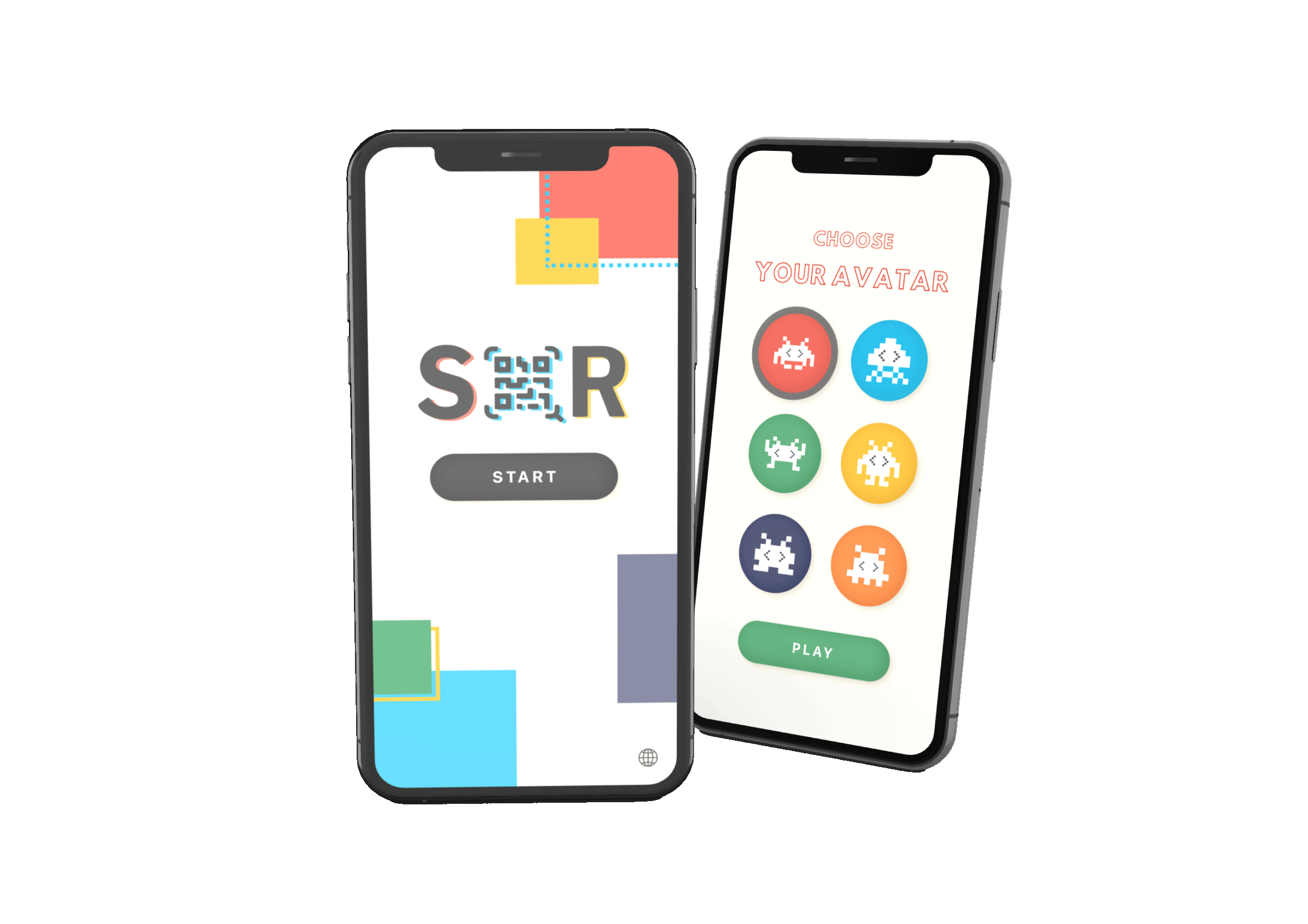
Our team designed SQR to have a simple user interface to make the overall game experience more intuitive. The simplicity and familiarity allows for a broader range of age demographics to participate.
Moving from our first iteration, we decided to have the game launch on a mobile website rather than an application as our findings showed that 79% of our target market was reluctant in downloading a new mobile app.
Initial Solution
Mobile app rewards program that utilizes QR codes implemented throughout train stations. Scanning codes prompt ad, which rewards commuters with points that can be used for transit funds. Fun activity to do while waiting and can earn money towards the next ride.
Feedback:
•Positive feedback for providing cost-saving opportunity
•People do not want to download more apps on their phone
•Concerns with ads invoking more stress than joy
Pivot One
Double-sided interactive kiosks for passengers to play games together. When the game is not in play, the kiosk will display a map to help passengers.
Feedback:
•Challenges with consistent revenue stream
•Expensive start-up costs
Final Solution
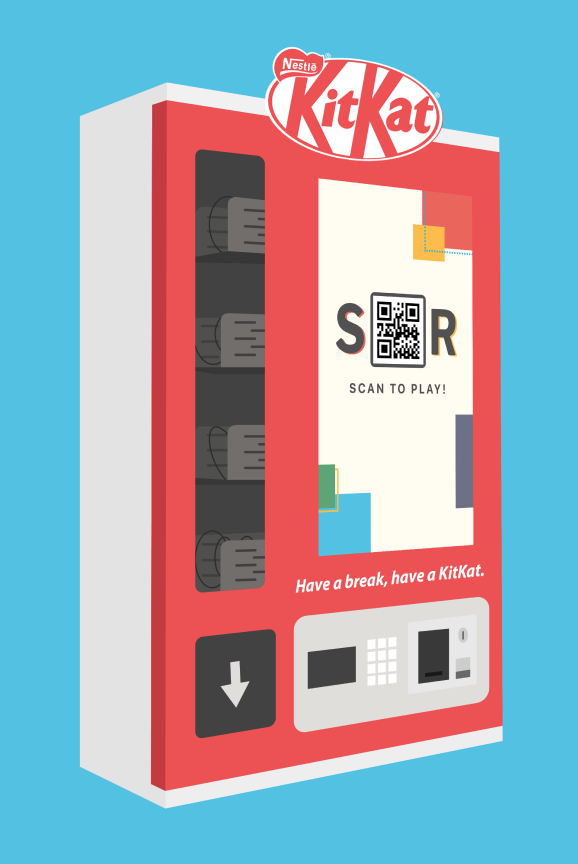
Vending machine with a smart screen that displays an interactive game. Scan QR code on screen to begin a multiplayer game for a chance to win a range of rewards. Players’ phones act as a controller to interact with the game.
Feedback:
•Positive feedback for sparking joy through community building
•Usability testings conducted, changes were made accordingly
Prototype
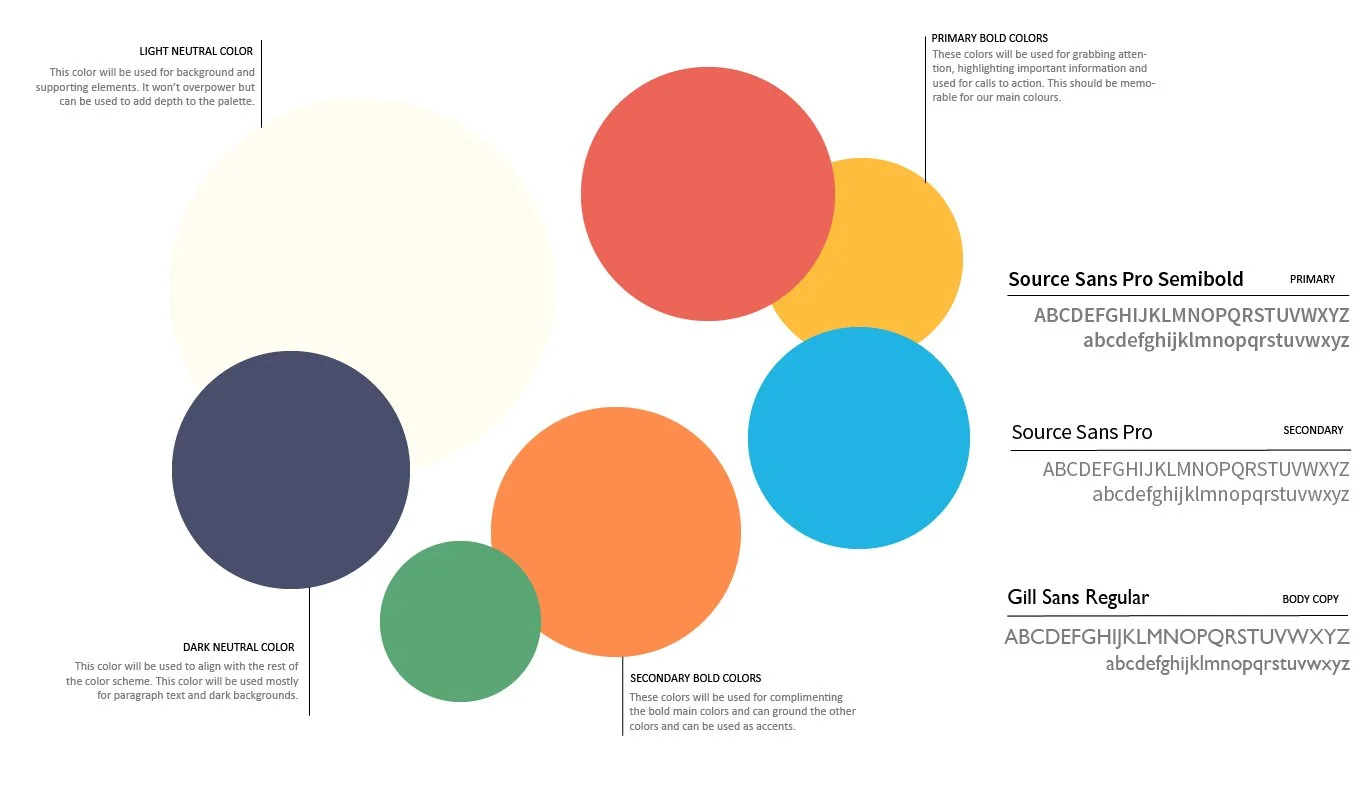
BRANDING GUIDELINES
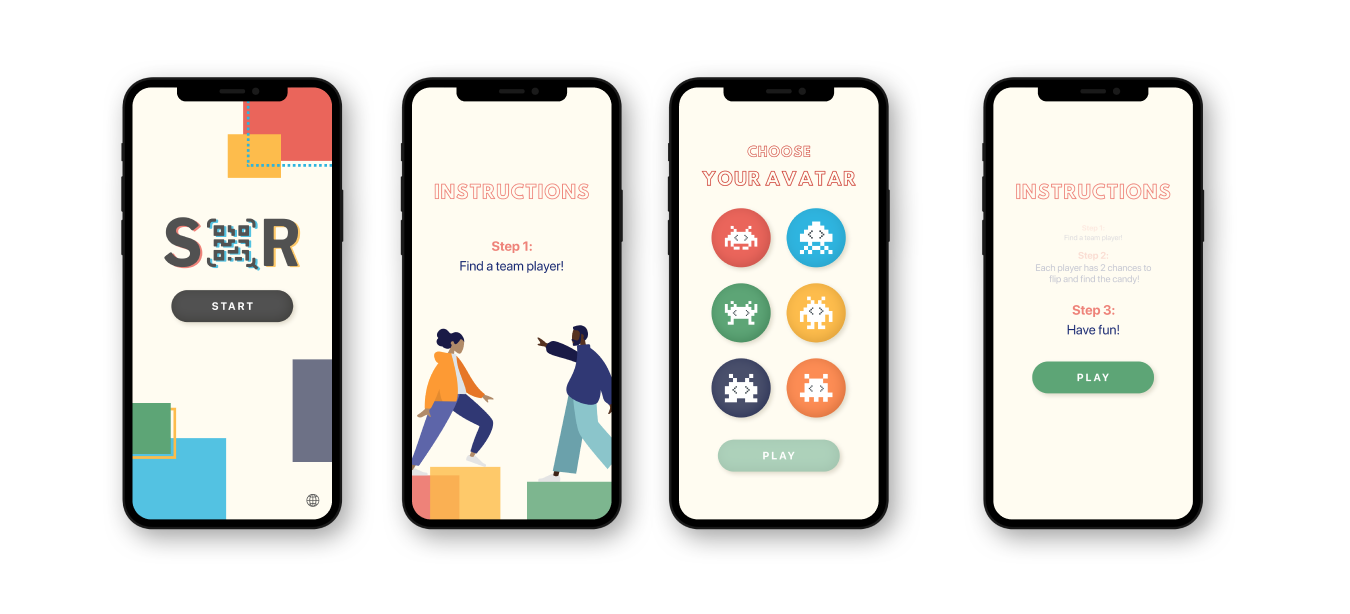
STREAMLINING THE USER JOURNEY
Users can use their phones to scan the QR code on the vending machine, this will immediately link to a webpage to a quick and simple game which you can connect with a fellow commuter for a chance to win a reward.
NEXT STEPS
After a review of our existing solution, we developed different iterations that could be implemented to recreate the feelings of excitement while fostering a sense of community.
By incorporating different sponsor companies, we will be able to provide users with more variety of excitement. In the games that we offer to our users, we aim to offer more control over their experience through their phones.